Selected Case Studies
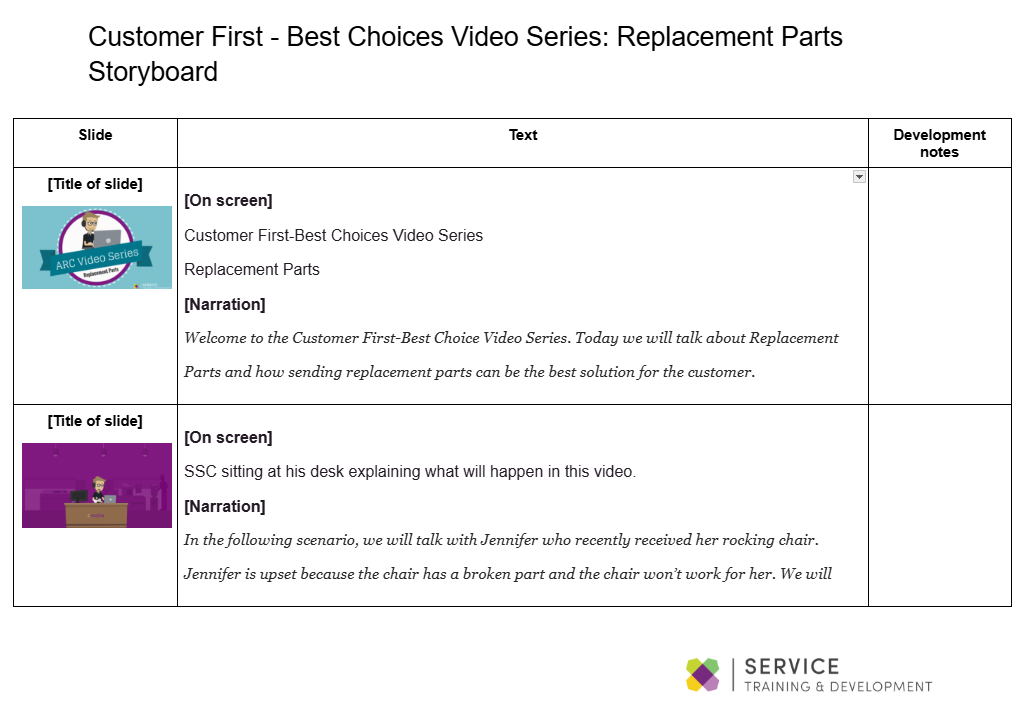
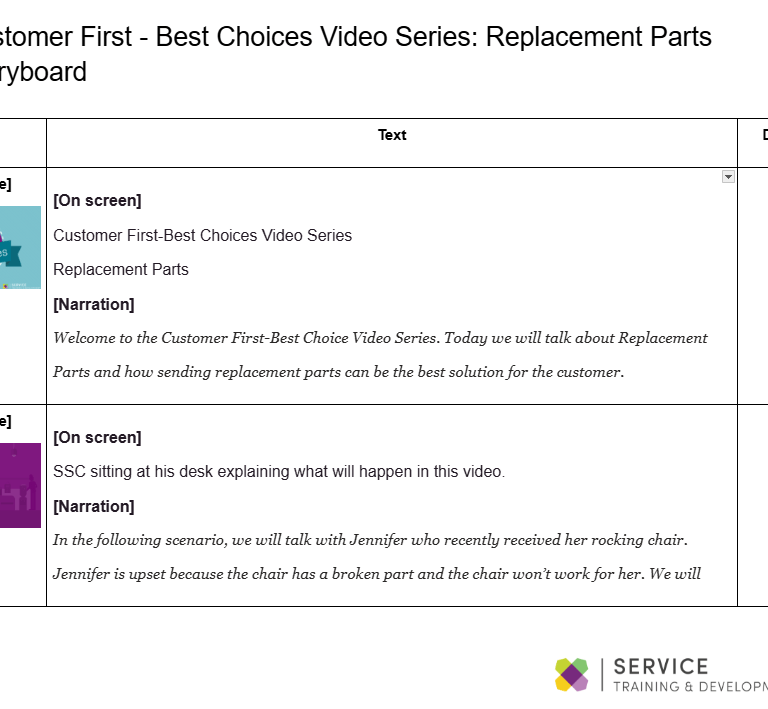

Business Context: Customer service teams were frequently defaulting to full product replacements when resolving damaged item complaints. While well-intentioned, this approach increased operational costs, shipping waste, and processing time.
As part of a broader training initiative to promote replacement parts as an effective and efficient resolution strategy, this video series was designed to shift agent behavior toward offering parts when appropriate.
Learner Insight: Agents often hesitated to recommend replacement parts due to concerns about frustrating already upset customers. Many lacked confidence in how to position parts as a helpful and convenient solution.
To influence behavior, the training needed to model real conversations and demonstrate how empathy, clarity, and confident communication could maintain trust while guiding customers toward business-aligned resolutions.
Design Strategy: I designed a scenario-based video series centered on realistic customer interactions.
This specific storyboard follows a frustrated customer with a broken rocking chair and demonstrates how a service agent:
Acknowledges emotion and builds rapport
Gathers relevant details
Explores resolution options collaboratively
Positions a replacement part as efficient and customer-friendly
Reinforces trust through clear communication
The strategy focused on modeling desired behaviors rather than simply explaining policy. The goal was to influence conversational technique, not just knowledge retention.
Execution: The video series was structured around scripted, emotionally authentic scenarios designed to reflect common frontline situations.
Key design elements included:
Realistic objections and emotional cues
Clear modeling of empathetic language
Intentional framing of replacement parts as a value-driven solution
Alignment with operational goals and cost-efficiency initiatives
The series supported broader training efforts to standardize resolution quality and promote sustainable service practices.
Impact: By modeling effective communication strategies, the video series supported:
Increased confidence in offering replacement parts
Improved consistency in resolution approaches
Reduced waste and shipping costs
Stronger alignment between customer satisfaction and business efficiency
This project reflects my approach to designing learning that connects behavioral change to measurable operational outcomes.
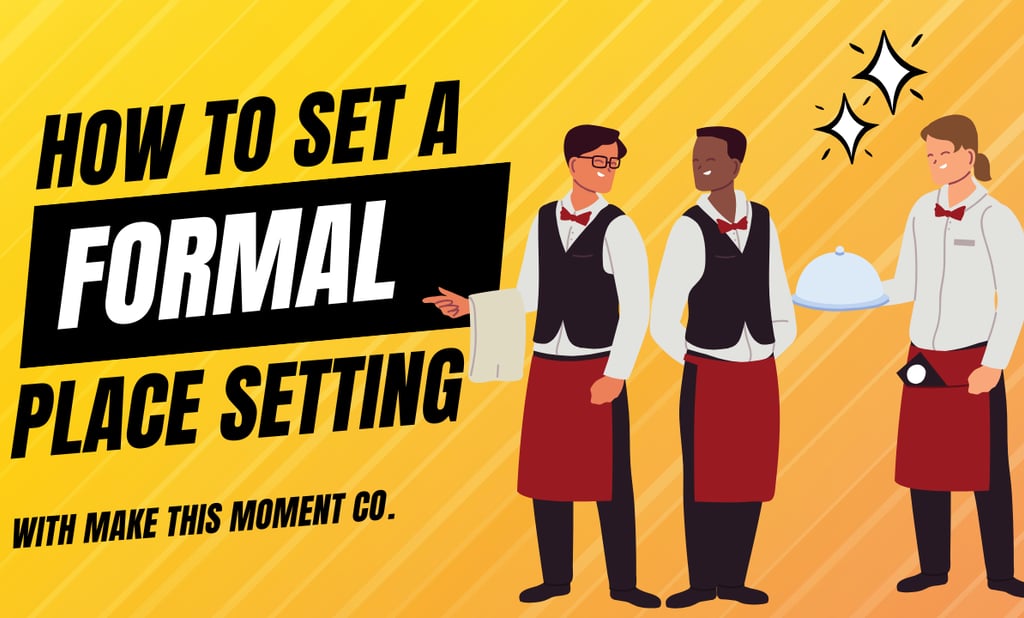
New Hire Orientation – “How to Set a Formal Place Setting”
Business Context: The organization was onboarding new frontline employees at scale, but early performance feedback revealed inconsistency in how new hires applied foundational service standards. While policy knowledge was covered during onboarding, learners lacked confidence in applying expectations in real customer interactions. Leadership needed a learning experience that went beyond information delivery and helped new hires internalize expectations early in their tenure.
Learner Insight: New hires were entering fast-paced environments where service quality directly impacted customer experience and operational performance. Traditional onboarding content was heavy on information and light on applied practice. Adult learners benefit from contextual learning and immediate application, especially when transitioning into customer-facing roles.
Design Strategy: I designed a scenario-based eLearning experience that placed learners inside realistic workplace moments from day one. Instead of presenting policies upfront, the module guides learners through decisions they will encounter in their role. Each scenario reinforces expectations through guided feedback, modeling, and practical examples. The design emphasized:
Realistic workplace decision-making
Safe practice environments
Immediate feedback
Visual consistency with operational standards
Short, focused interactions to respect learner time
Execution: The module was built using Articulate Storyline and structured around interactive scenarios that simulate common service situations. Learners actively choose responses and see modeled outcomes, reinforcing desired behaviors. A final knowledge check ensures understanding of core standards while reinforcing correct application.
Impact: Managers reported improved clarity in scheduling discussions following rollout of the module. By creating a shared understanding of terminology, teams were better aligned in workforce planning conversations and performance reporting. The module reduced reliance on peer-to-peer explanation and informal interpretation, providing a standardized reference that supported consistency across operations teams. Because the course was built in a modular format, it was easily integrated into onboarding and used as a just-in-time resource for new and existing employees. The design approach also created a scalable template for future onboarding modules, supporting consistency across teams.
Fireside Chat
Business Context: Wayfair’s customer service organization sought to strengthen communication and engagement between leadership and frontline teams, particularly across a distributed workforce of remote and in-office employees.
Leaders needed a consistent, accessible format to share priorities, reinforce company values, and provide greater transparency into departmental direction.
Learner Insight: Employees are more engaged when leadership communication feels authentic, structured, and easy to digest. Without thoughtful production and flow, internal communications can feel fragmented or difficult to connect with.
The video needed to feel approachable and conversational while still maintaining clarity, professionalism, and brand consistency.
Design Strategy: I partnered with two customer service leaders to design and produce an executive-led fireside chat that translated strategic messaging into a cohesive and engaging viewing experience.
The strategy focused on:
Structuring the conversation to maintain flow and clarity
Reinforcing key themes through subtle visual cues
Integrating branded graphics and light animation to enhance engagement
Preserving authenticity while elevating production quality
The goal was to create a dynamic communication format that strengthened leadership visibility without feeling overly scripted or formal.
Execution: Using Camtasia, Canva, and Vyond, I:
Edited and refined the recorded conversation for pacing and clarity
Integrated branded graphics and motion elements
Designed visual overlays to reinforce key talking points
Ensured the final product felt polished while maintaining an approachable tone
The final video balanced production quality with conversational authenticity.
Impact: The finished video helped employees connect more directly with leadership and gain deeper insight into departmental priorities and company values.
The series fostered stronger engagement across both remote and in-office teams, serving as a meaningful touchpoint that reinforced organizational culture and improved communication consistency.
